
Easy Vegan Pancakes (Fluffy, 1-Bowl, Ready in 15 Minutes)
UpdatedWho says vegan pancakes have to be complicated? If you have been avoiding making them at home because you thought you needed fancy ingredients or serious cooking skills, I am here to change your mind completely.
This easy pancake recipe is honestly one of the simplest things you can make in the kitchen, even if you are a total beginner. We are talking about one bowl, a handful of pantry staples, and about 15 minutes standing between you and a tall, fluffy stack of golden pancakes. No eggs, no dairy, no stress.
In this post, I am going to walk you through every single step so you feel completely confident from start to finish. You will learn which ingredients make these pancakes so light and airy, how to get that perfect golden color, and a few simple tips to avoid the most common beginner mistakes. By the time you are done reading, you will be ready to flip your first batch like a pro. Let's get into it!
What You'll Need (Just 6 Ingredients)
One bowl, six ingredients, and about 20 minutes is genuinely all it takes. Here's exactly what you'll need before you get started:
All-purpose flour is the structural backbone of your batter. It gives the pancakes their body and helps everything hold together. If you're gluten-free, a 1-to-1 gluten-free blend works beautifully as a straight swap without any complicated math or extra steps.
Eat Peggs powdered egg substitute replaces the whole egg without requiring any refrigeration. Just mix it with water according to the package directions, then add it to your batter exactly as you would a regular egg. It provides binding and a boost of plant-based protein, sourced from chickpeas, and it's shelf-stable enough to live in your pantry indefinitely.
Baking powder is genuinely the MVP of this recipe. Fluffy pancakes come from good leavening, not from eggs. As plant-based creators like Olivia Biermann have shown, you can make perfectly stackable, fluffy pancakes with zero eggs when you get your leavening right.
Non-dairy milk keeps things dairy-free and flexible. Oat, almond, soy, coconut, and hemp milk all work interchangeably here. Soy milk is worth a mention because it thickens slightly when heated, which adds a little extra structure to the finished pancake.
A neutral oil or melted vegan butter adds the moisture and tenderness that makes each bite soft rather than dense or rubbery. Just two tablespoons is enough.
Salt and sugar round everything out. Sugar encourages that beautiful golden-brown color through the Maillard reaction, while salt balances the sweetness and sharpens every other flavor in the batter. A small amount of each goes a long way.
How to Make Easy Vegan Pancakes
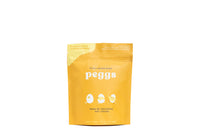
Made by chickpeas, not chicks
This recipe was made with Peggs
$36.00 — Peggs Plant-Based Egg | Vegan, Gluten-Free, Soy-Free
Now that you have everything prepped and ready to go, let's walk through the process from start to finish. These steps are straightforward, and once you've made this recipe once, you'll have it memorized.
Step 1: Whisk Your Dry Ingredients
Grab your large mixing bowl and add your flour, baking powder, sugar, and salt. Whisk them together until evenly combined, about 30 seconds. This step matters more than it might seem. Distributing the baking powder evenly throughout the flour ensures every pancake rises consistently, so no one gets stuck with a flat one. Set the bowl aside once it's mixed.
Step 2: Prepare Your Eat Peggs Egg and Wet Ingredients
Mix your Eat Peggs powder with water according to the package directions. This gives you a ready-to-use egg substitute that binds the batter and adds a bit of structure, similar to what a traditional egg would do. Once it's mixed, combine it with your non-dairy milk (oat, soy, and almond all work beautifully here) and your oil. Stir the wet ingredients together so everything is evenly blended before you touch the dry bowl.
Step 3: Combine Wet and Dry, Then Stop
Pour your wet mixture into the dry ingredients and stir gently until just combined. Here is the part that trips up a lot of beginners: lumpy batter is completely fine. It is actually what you want. Overmixing develops the gluten in the flour, which makes pancakes tough and flat. A few stirs with a fork or spatula is all you need. If you can still see a streak or two of flour, that is totally okay.
Step 4: Rest the Batter While You Heat the Pan
Let your batter sit for 3 to 5 minutes. During this time, the baking powder begins activating and the batter thickens slightly. Preheat your non-stick pan or griddle to medium heat and lightly grease it with vegan butter or a neutral oil. This community thread on vegan pancake egg substitutes shows just how many beginners skip this rest step and wonder why their pancakes come out dense. Do not skip it.
Step 5: Cook, Watch for Bubbles, Flip Once
Pour roughly ¼ cup of batter per pancake onto your heated surface. Cook for 2 to 3 minutes until you see bubbles forming across the surface and the edges look dry and set. Flip once and cook for another 1 to 2 minutes until the underside is golden. The one-flip rule is key: flipping multiple times deflates the pancake and ruins the texture. For more visual inspiration on what perfectly cooked vegan pancakes look like, this fluffy vegan pancake tutorial is worth a quick watch before you start.
What Do Eggs Actually Do in Pancakes?
Before we dive into egg-free pancake making, it helps to understand why eggs are in the recipe in the first place. Spoiler: they're doing more work than most people realize, and knowing their roles makes it much easier to swap them out with confidence.
Binding is the most important job eggs have in pancake batter. They act like glue, holding all the ingredients together so your pancakes stay intact when you flip them. Without enough binding power, pancakes crack, tear, or fall apart on the spatula. Not exactly the breakfast moment you were hoping for.
Moisture and richness come primarily from the egg yolk, which contains fat and liquid. That fat is what gives pancakes their soft, tender interior. When eggs are removed entirely without a proper substitute, pancakes often turn out noticeably drier and tougher, which is a common complaint from people who simply skip the egg rather than replacing it thoughtfully.
Structure comes from egg proteins, which coagulate (meaning they set and firm up) during cooking. This protein network gives the pancake a stable form so it holds its shape on the plate rather than going limp or collapsing. It's a quieter function than binding, but just as important for that satisfying, cohesive texture.
Lift is where eggs play more of a supporting role. They do trap a small amount of air when mixed into batter, contributing a minor degree of rise. However, baking powder is the real engine behind fluffy pancakes. In fact, a standard scratch pancake recipe typically uses both eggs and baking powder together, confirming they work as teammates rather than replacements for each other.
So where does Eat Peggs fit in? Eat Peggs is made primarily from chickpeas, which is actually a well-established egg-function replicator in plant-based cooking. The chickpea-based protein handles binding and structure, stepping directly into the roles that whole egg proteins traditionally fill. When you mix the powder with water, it reconstitutes to supply the moisture the batter needs for that tender interior. The result is a pancake that cooks, flips, and holds together just like one made with conventional eggs, without any of the guesswork that comes with DIY substitutes like mashed banana or flax eggs.
Best Egg Substitutes for Pancakes (Compared Side by Side)
Now that you know what eggs are actually doing in your batter, let's look at your best options for replacing them. Not all substitutes perform equally, and the right choice really depends on what kind of pancakes you're making and what you have on hand.
Flax Egg (1 tbsp ground flaxmeal + 3 tbsp water)
Mix these two ingredients together and let the mixture sit for about five minutes until it forms a gel. It binds reasonably well, but it does bring a slightly nutty, earthy flavor to your batter. The texture trade-off is real too: flax eggs tend to produce denser, chewier pancakes compared to a classic fluffy stack. They work great in heartier, whole-grain-style recipes where that earthy note feels at home, but for a simple, neutral breakfast pancake, the flavor can be noticeable.
Chia Egg (1 tbsp chia seeds + 3 tbsp water)
The chia egg works on the same principle as flax, forming a gel after five to ten minutes of resting. The upside is a more neutral flavor, which makes it a bit more flexible. The downside is that if your batter sits too long, the gel can make things gummy and slightly dense. It's a solid backup option, but the waiting time and texture risks are worth keeping in mind.
Mashed Banana (1/4 cup per egg)
Banana is fantastic for binding, and it brings natural moisture to the batter. The catch is that the flavor is unmistakable. If you're intentionally making banana pancakes, this is a wonderful choice. If you want a classic, neutral stack, the sweetness and banana taste will be hard to ignore.
Unsweetened Applesauce (3 tbsp per egg)
Applesauce is a pantry-friendly option with a mild flavor impact. It adds moisture, which sounds helpful, but that extra moisture can make pancakes slightly dense and less golden on the surface. It works best in lightly spiced recipes where a softer texture is acceptable.
Eat Peggs Powdered Egg Substitute
This is where things get genuinely easy. Eat Peggs is a shelf-stable, chickpea-based powdered egg substitute that mixes directly with water, no resting time, no gel-forming, no planning ahead. The flavor is completely neutral, so it won't change the taste of your pancakes at all. It also delivers plant-based protein from chickpeas, something none of the fruit-based options above can offer. Because it lives in your pantry, it's always available when you need it, even when you're out of fresh eggs or ripe bananas. For a review of how real egg substitutes perform side by side, it's clear that neutral flavor and reliable binding are the qualities that matter most. Eat Peggs checks both boxes across every pancake style.
Quick Comparison Table
Substitute |
Flavor Impact |
Texture Result |
Ease of Use |
Protein Contribution |
|---|---|---|---|---|
Flax egg |
Nutty, earthy |
Dense, chewy |
Requires 5-min rest |
Minimal |
Chia egg |
Neutral |
Can be gummy |
Requires 5-10 min rest |
Minimal |
Mashed banana |
Strong banana flavor |
Moist, soft |
Instant |
Minimal |
Unsweetened applesauce |
Mild |
Dense, less golden |
Instant |
None |
Eat Peggs |
Completely neutral |
Fluffy, consistent |
Mix with water, done |
Yes, from chickpeas |
The bottom line: if you want versatility without compromising flavor or texture, Eat Peggs is the most reliable choice for any style of pancake you're making.
Tips for the Fluffiest Vegan Pancakes Every Time
Getting fluffy pancakes comes down to a handful of small habits that make a surprisingly big difference. Master these five techniques and you'll consistently pull golden, cloud-like stacks off the griddle every single time.
Don't overmix the batter. This is the single most common pancake mistake, and it happens fast. Once you combine your wet and dry ingredients, stir only until the dry streaks just disappear, roughly 10 to 12 strokes. Overworking the batter develops gluten strands that tighten the mixture and squeeze out the air, leaving you with flat, rubbery pancakes instead of light, tender ones. A lumpy batter is not a problem; it's actually a good sign.
Let the batter rest for 3 to 5 minutes. This short window is genuinely functional, not optional. Resting gives the baking powder time to begin its first activation and allows the flour to fully hydrate. The result is a visibly thicker, more cohesive batter before it even touches the pan, which translates directly into a fluffier finished pancake. Use this time to heat your griddle.
Nail your pan temperature. Medium heat is your target. Before adding batter, flick a few drops of water onto the surface; they should dance and evaporate on contact. Too cool and the batter spreads flat before it sets; too hot and the outside scorches while the middle stays raw. Per this detailed vegan pancake guide, your visual flip cue is small holes forming on the surface with dry, matte edges.
Check your baking powder. Since vegan pancakes rely almost entirely on chemical leavening for their lift, stale baking powder is a silent recipe killer. If yours has been open for more than six months, test it by dropping a teaspoon into hot water. Weak or absent bubbling means it's time to replace it.
Never press the pancake after flipping. It feels satisfying, but pressing down with a spatula crushes the CO2 bubbles that your baking powder worked to create. Those air pockets are your fluffiness. Protect them.
Variations and Add-Ins to Try
Once you've nailed the basic recipe, the fun really begins. These simple variations let you customize your stack for any occasion, and they all work seamlessly with the same base batter you've already learned.
Blueberry Pancakes
Fold in about 1/2 cup of fresh or frozen blueberries right before you start cooking, not when you first mix the batter. This keeps the berries intact and prevents the batter from turning purple. Frozen blueberries work just as well as fresh ones and don't need to be thawed first; just toss them straight in. They'll warm through on the griddle and get perfectly jammy in the middle.
Chocolate Chip Pancakes
Add 1/4 cup of dairy-free chocolate chips to your finished batter for an easy weekend treat. Sprinkle a few extra chips directly onto each pancake right after you pour the batter onto the griddle for maximum chocolate pull.
Banana Walnut Pancakes
Mash half a ripe banana directly into your wet ingredients before combining with the dry mix. The banana adds natural sweetness and a subtle creaminess, so you can cut back on added sugar if you like. Fold in a small handful of chopped walnuts at the end for crunch.
Gluten-Free Swap
Replace the all-purpose flour with a certified gluten-free flour blend using a simple 1-to-1 ratio. The Eat Peggs egg substitute performs just as reliably in this version, making your pancakes both egg-free and gluten-free without any extra troubleshooting.
Camping and Travel Kit
Because Eat Peggs is powdered and shelf-stable, you can pre-mix all the dry ingredients including the flour, baking powder, sugar, salt, and Eat Peggs into a zip bag before you leave home. At the campsite, just add water and a splash of oil. It's a genuinely complete grab-and-go pancake kit that requires zero refrigeration, which makes it ideal for camping, road trips, or RV cooking.
Frequently Asked Questions
Can you make pancakes without eggs?
Yes, absolutely. Eggs are not essential for making great pancakes. The real workhorse behind fluffy pancakes is baking powder, which creates the lift and lightness you're after. Eggs traditionally handle binding and structure, but a good egg substitute covers those roles without any compromise. A chickpea-based powdered egg substitute like Eat Peggs mixes directly into your batter, provides plant-based protein, and holds everything together just as well as a conventional egg would.
What is the best egg substitute for pancakes?
It really depends on what matters most to you. If you want something quick, neutral in flavor, and nutritionally useful, a powdered egg substitute like Eat Peggs is the most straightforward all-purpose option. Flax eggs (one tablespoon of ground flaxseed mixed with three tablespoons of water) and chia eggs work well too, but both require a five to ten minute rest period before use, and they can introduce a slightly earthy flavor to your batter. Applesauce adds moisture and mild sweetness, which works beautifully in certain recipes but shifts the flavor profile noticeably.
Are vegan pancakes fluffy?
Completely, when you follow the right technique. Easy vegan pancake recipes consistently produce fluffy, golden results without a single egg. The secret combination is generous baking powder, a two to three minute batter rest before cooking, and a properly preheated pan. Eggs have nothing to do with fluffiness. That is entirely a leavening and technique issue.
Do pancakes need eggs to bind?
Not with the right substitute in place. Chickpea-based egg powders, flax eggs, and chia eggs all deliver adequate binding for pancake batter. The gluten in your flour also contributes structure, so binding is rarely a challenge in pancakes the way it might be in more delicate baked goods.
Can I make these pancakes ahead of time?
Yes, and they hold up really well. Cooked pancakes keep in the refrigerator for up to three days and freeze well for up to two months. Reheat them straight in a toaster or on a warm skillet for best texture. One important note: vegan pancake batter is best used fresh. Baking powder begins reacting as soon as it contacts liquid, and if the batter sits too long, it loses its leavening power and your pancakes will come out noticeably flatter.
The Bottom Line
Here's what it all comes down to: fluffy, golden vegan pancakes are genuinely easy, and you don't need a long ingredient list or any special skills to pull them off. Six pantry staples, one bowl, and about 15 minutes is all that stands between you and a stack worth getting excited about. Baking powder handles the lift and airiness, while a reliable egg substitute like Eat Peggs handles the binding and structure that hold everything together.
This recipe works for practically any situation. Cooking plant-based on a Tuesday morning, managing an egg allergy, batch-prepping breakfast for the week, or packing light for a camping trip — the same simple formula adapts without any fuss. Unlike fresh bananas or flax eggs, Eat Peggs is shelf-stable and ready whenever you need it, no prep or waiting required.
Keep a canister in your pantry and you'll always have a consistent, dependable egg replacement on hand. It takes the guesswork out of vegan baking, one delicious stack at a time.
Conclusion
There you have it: fluffy, golden vegan pancakes that are simple enough for any beginner to nail on the very first try. To recap the big takeaways, you only need six basic pantry ingredients, everything comes together in a single bowl, and the whole process takes just 15 minutes from start to finish. A few small techniques, like letting your batter rest and keeping the heat at medium, make all the difference between flat and fabulous.
Vegan cooking does not have to feel overwhelming or complicated, and this recipe is proof of that.
Now it is your turn. Grab that mixing bowl, fire up the skillet, and make your first batch this weekend. When you do, leave a comment below and let me know how they turned out. You might be surprised at just how easy delicious can be.
Free download
Get the Egg-Free Baking Cheat Sheet
The one ratio to remember, quick conversions, and where to add Peggs — straight to your inbox.
You're in! Grab your cheat sheet below.
Download the cheat sheet